Forget the SUV Obsession: What India's Compact Car King Teaches Us About Smarter Daily Driving
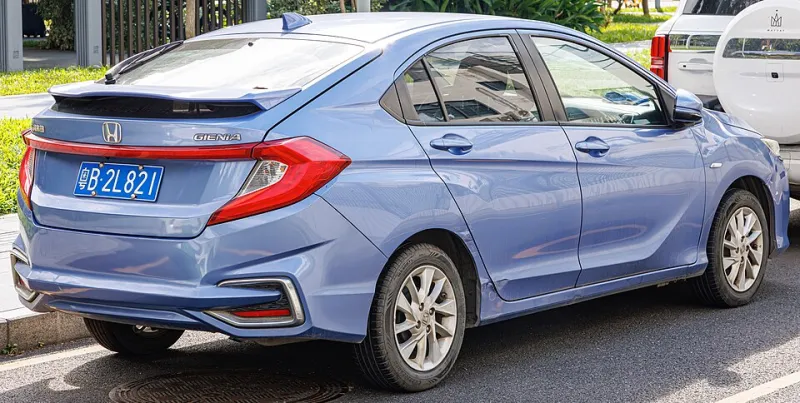
Photo: Dinkun Chen, CC BY-SA 4.0, via Wikimedia Commons
America loves a big vehicle. Walk into any dealership from Phoenix to Pittsburgh and you'll find showroom floors dominated by full-size pickups, three-row SUVs, and crossovers that could comfortably double as studio apartments. It's a cultural reflex at this point — bigger means safer, more capable, more American.
But halfway around the world, a different automotive philosophy has been quietly winning. Maruti Suzuki, India's dominant automaker, has spent more than four decades perfecting something the US market has largely abandoned: the art of building compact cars that are genuinely excellent at being cars. Not compromised. Not stripped down. Just brilliantly engineered for the way most people actually drive.
So what happens when you hold that philosophy up next to American daily driving habits? The results are more interesting than you might expect.
The Numbers That Put Things in Perspective
Maruti Suzuki commands roughly 40 to 45 percent of India's total passenger vehicle market. That's not a niche success story — that's a near-monopoly built on the backs of compact hatchbacks, subcompact sedans, and small crossovers. Models like the Swift, Baleno, and Alto have sold in the millions, not because Indian consumers had no other options, but because Maruti consistently delivered what those buyers actually needed.
Now consider the American context. The average US commute is about 27 minutes each way. Most of that happens on suburban roads, urban streets, and highway stretches where the theoretical off-road capability of a Ford Explorer or Chevy Tahoe is about as useful as a snorkel on a goldfish. The average American car sits parked roughly 95 percent of the time. And yet, the average transaction price for a new vehicle in the US recently crossed $48,000.
Something doesn't add up.
Space Efficiency: Doing More With Less
One of the most underrated things Maruti has mastered is the concept of packaging — fitting a genuinely usable interior into a footprint that doesn't require a dedicated parking strategy every time you leave the house.
Take the Maruti Suzuki Baleno, a premium hatchback that measures just over 162 inches in length. For reference, that's about the same size as a Honda Fit, which was discontinued in the US in 2020. But the Baleno's interior volume, headroom, and cargo utility would surprise anyone who assumes small equals cramped. Maruti's engineers treat interior space like a resource to be carefully allocated rather than a luxury to be thrown at by adding more sheet metal.
Compare that approach to something like the Toyota RAV4, America's best-selling non-truck vehicle. It's 180 inches long, gets around 30 mpg combined, and starts at roughly $30,000. It's a genuinely good vehicle. But for a single driver commuting 25 miles to an office and grabbing groceries on the way home, it's also a lot of car doing very little of what it was built to do.
Fuel Economy as a Design Priority, Not an Afterthought
In India, fuel costs relative to average income are significantly higher than in the US. That economic reality forced Maruti to treat fuel efficiency not as a marketing checkbox, but as a core engineering mandate. The result is a lineup where even the most feature-loaded models routinely deliver fuel economy figures that would make American compact car buyers do a double take.
The Maruti Swift, for instance, is tuned to extract maximum efficiency from a small-displacement engine without sacrificing the kind of responsive, enjoyable driving character that makes a car worth owning. That balance — frugal but fun — is something American automakers have historically struggled to nail in the entry-level segment.
For American drivers watching gas prices bounce between $3 and $5 per gallon depending on the season and the state, that philosophy translates directly into real money. A vehicle averaging 38 mpg versus one averaging 26 mpg over 15,000 miles annually saves somewhere between $400 and $700 in fuel costs per year, depending on local prices. Over a five-year ownership period, that's a meaningful number.
Maintenance Costs: The Hidden Advantage
Here's where the Maruti philosophy gets really interesting for the American market. One of the brand's foundational promises to Indian consumers has always been low cost of ownership — not just at the point of sale, but across the entire lifecycle of the vehicle.
Maruti vehicles are engineered with serviceability in mind. Parts are standardized, widely available, and priced accessibly. The mechanical simplicity of many Maruti powertrains means that routine maintenance stays routine rather than escalating into expensive diagnostic odysseys.
In the US, the average annual vehicle maintenance and repair cost has been climbing steadily, now sitting above $1,200 for many owners. Vehicles with complex turbocharged engines, proprietary tech systems, and limited independent repair options push that number higher. The Maruti approach — simple, durable, fixable — represents a counterpoint that American consumers increasingly say they want, even if the market hasn't fully delivered it.
What American Drivers Could Actually Learn Here
None of this is an argument that every American should swap their F-150 for a hatchback. Context matters. If you're hauling lumber every weekend or navigating unpaved rural roads, a compact car isn't your answer.
But for the millions of Americans who drive primarily in urban and suburban environments, who park in tight city garages, who commute solo five days a week, and who are quietly exhausted by the financial weight of vehicle ownership — the compact car philosophy that Maruti Suzuki has refined over decades deserves a serious look.
The idea that a smaller car means a lesser car is largely a cultural assumption, not an engineering reality. Maruti has proven that on roads far more demanding than most American daily drivers will ever encounter. That's a lesson worth paying attention to.