The Color Nobody Talks About That's Quietly Protecting Your Resale Value
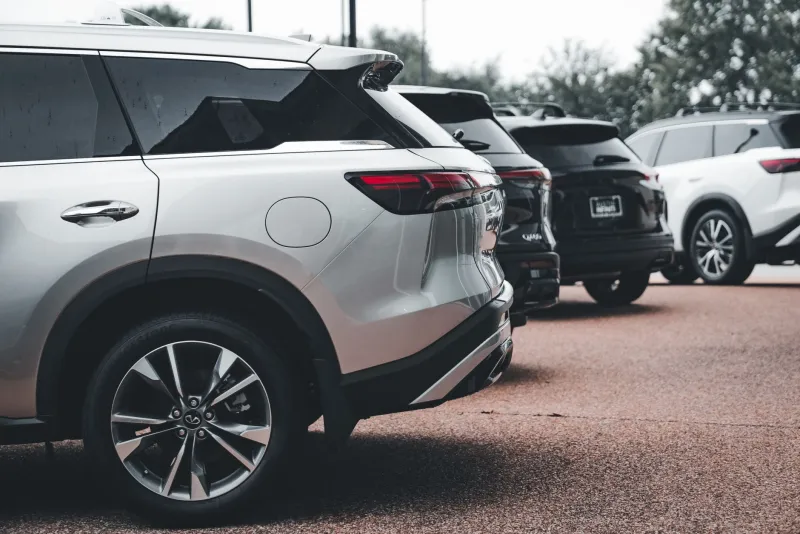
Walk into any US dealership lot and you'll be greeted by a riot of color. Burnt orange pickups. Electric blue crossovers. Deep burgundy sedans that look incredible on launch day and suspiciously faded eighteen months later. American car culture has long equated bold paint choices with personality, and automakers have happily obliged — charging premium prices for "exclusive" finishes that, frankly, don't always age well.
Then there's Maruti Suzuki's approach. Pearl whites. Metallic silvers. Granite grays. The occasional understated red or blue that reads more "sensible commuter" than "weekend warrior." American enthusiasts who encounter the lineup for the first time often shrug it off as a developing-market limitation — the idea being that Maruti just hasn't gotten around to the fun stuff yet.
That read is almost entirely wrong.
Why Maruti's Palette Isn't an Accident
Maruti Suzuki operates in one of the most demanding automotive environments on the planet. Indian roads subject cars to extreme heat, intense monsoon humidity, heavy urban dust, and ultraviolet radiation levels that would make a Phoenix car owner wince. The company has spent decades engineering paint systems that can survive those conditions across millions of vehicles — and survive them cheaply enough that repairs stay accessible to ordinary buyers.
The result is a color strategy built around UV-stable pigments, fade-resistant basecoats, and clear-coat formulations that hold up under prolonged solar punishment. Neutral tones — particularly whites and light metallic silvers — aren't just conservative choices. They're the colors that happen to reflect the most solar energy, reducing surface temperatures and slowing the photochemical breakdown that causes paint to chalk, crack, and peel.
This isn't unique knowledge. Fleet operators in the American Southwest have known for years that white and silver vehicles retain their finish longer than darker or more saturated colors. What makes Maruti interesting is that this logic is baked into the product at a mass-market scale, rather than being an afterthought for commercial buyers.
What American Resale Data Actually Says About Paint Color
The US used-car market has a well-documented relationship between exterior color and resale value. iSeeCars, CarGurus, and various auction analytics firms have published research over the years showing that neutral colors — particularly white, silver, gray, and black — consistently hold value better than niche or trendy shades. A 2023 analysis found that yellow, gold, and orange vehicles depreciated at significantly higher rates than their white or silver counterparts across most mainstream segments.
The reasoning is straightforward: a larger pool of buyers will consider a silver car than a burnt sienna one. More demand means better pricing at resale. Dealers know this. Private sellers learn it the hard way.
Maruti's color lineup, almost by accident of its engineering priorities, maps almost perfectly onto the palette that American used-car buyers prefer. A pearl white Swift or a metallic silver Baleno isn't making a compromise — it's landing squarely in the sweet spot of broad market appeal.
The Fading Problem Nobody Budgets For
Here's the part that rarely shows up in new-car reviews: paint degradation is a real ownership cost, and it's one that hits harder in certain US climates than buyers anticipate.
States like Arizona, Nevada, New Mexico, and Southern California combine high UV indexes with temperature swings that stress paint adhesion. Florida adds salt air and intense humidity into the mix. Even the Midwest isn't immune — summer heat and winter road salt create a punishing cycle that accelerates surface wear on finishes that weren't engineered to handle it.
A quality repaint on a single panel runs anywhere from $300 to $800 at a reputable body shop. A full vehicle respray? Easily $3,000 to $5,000 or more for anything approaching factory quality. These aren't hypothetical numbers — they're the kind of bills that show up when a five-year-old car with a flashy factory color hits the secondary market looking rough.
Maruti's paint engineering, optimized for harsh conditions from day one, tends to sidestep much of this. Owners in India routinely report paint that holds its sheen well past the 100,000-kilometer mark without significant fading or chalking — a testament to formulations built for punishment rather than showroom appeal.
The Broader Lesson About 'Boring' Design Decisions
There's a pattern worth noticing across Maruti Suzuki's engineering choices. Features or design decisions that look like limitations on the surface — simple drivetrains, conservative styling, modest displacement engines — frequently turn out to have a practical logic that pays dividends over a vehicle's real-world lifespan.
The color palette is a perfect small-scale example of this. What reads as a lack of imagination in a brochure is actually a set of deliberate trade-offs: prioritize durability and broad resale appeal over showroom excitement. It's the kind of thinking that makes more sense the longer you own the vehicle.
American automakers have generally moved in the opposite direction. Expanding color options, offering matte finishes, pushing specialty paints that look stunning at launch and require careful maintenance to keep that way. There's a market for that approach — plenty of buyers genuinely want a car that expresses something specific about them. But for buyers prioritizing total cost of ownership, those choices carry hidden costs that don't show up on the window sticker.
What This Means If You're Shopping Smart
If you're in the market for a vehicle and you're thinking beyond the first year of ownership, paint is worth taking seriously as a factor. Not in a way that should dominate the decision, but as part of an honest accounting of long-term costs.
A few practical takeaways:
- White and silver consistently outperform niche colors at resale in the US market, and they're the backbone of Maruti's lineup for good reason.
- UV resistance matters more than most buyers realize, particularly in Sun Belt states where paint degradation can become a visible problem within three to five years.
- Conservative finishes carry lower maintenance risk. Touch-up paint matches more reliably on neutral tones, minor blemishes are less visible, and the used-car buyer pool is larger.
None of this means you should ignore the color you actually want. But it's worth understanding that Maruti's "boring" palette isn't a concession to limited resources — it's a reflection of engineering priorities that happen to align well with smart long-term ownership in the American market.
Sometimes the least exciting choice on the lot is the one that makes the most sense once the odometer starts climbing.