Cheap, Compatible, and Surprisingly Good: How Indian Auto Parts Are Winning Over American DIY Mechanics
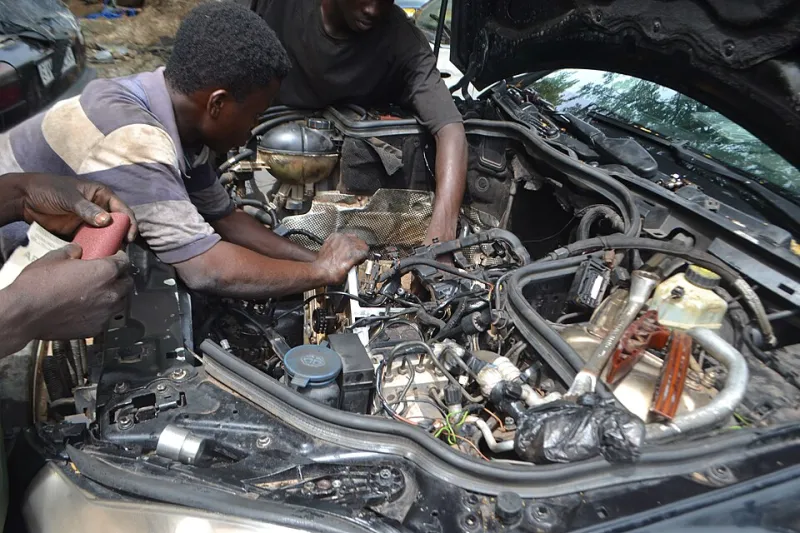
Photo: Kwamitsey, CC BY 4.0, via Wikimedia Commons
There's a conversation happening in garages across America that nobody's really talking about yet. It usually starts the same way — a repair estimate that's way too high, a parts supplier that's backordered for weeks, or a mechanic who's just tired of paying a premium for components that don't justify the price tag. And increasingly, it ends with someone placing an order for a Maruti Suzuki part.
Yeah, you read that right.
India's best-selling automaker — the one responsible for putting more first-time car buyers on the road than any other brand in the subcontinent's history — has quietly built one of the most robust aftermarket parts ecosystems on the planet. And some sharp-eyed American DIYers have started to notice.
The Parts Bin Nobody Told You About
Maruti Suzuki's lineup shares a significant amount of DNA with Suzuki vehicles that were sold in the US market for years. The Swift, the SX4, the Esteem, the Samurai — Suzuki had a real presence here before pulling out in 2013. That means a substantial overlap exists between components engineered for Maruti's Indian lineup and parts that fit legacy Suzuki vehicles still rolling around American driveways and garages.
But the story goes deeper than just old Suzuki compatibility. Maruti's supplier network — which includes major Tier-1 manufacturers like Bosch, Denso, and Minda Industries — produces components that meet international quality benchmarks. These aren't backyard knockoffs. They're parts built to spec for a company that moves over 1.5 million vehicles a year. That kind of volume forces quality discipline in ways that smaller production runs simply don't.
For American mechanics, that translates to a parts catalog that's enormous, well-documented, and — crucially — priced well below what you'd pay at your local AutoZone or dealer parts counter.
The Numbers Don't Lie
Let's get specific, because this is where things get genuinely interesting.
Take something as straightforward as a fuel injector. For a mid-2000s Suzuki Swift (sold in the US under that name), OEM replacements from domestic suppliers typically run between $80 and $120 per unit. Sourcing the equivalent Maruti-spec component through an international parts platform like Nengun, PartsAvatar, or direct from Indian exporters on platforms like IndiaMart? You're looking at $25 to $45 for the same Bosch-manufactured unit — sometimes the identical part number, just routed through a different supply chain.
Brake pads tell a similar story. Maruti-spec pads for vehicles sharing platform architecture with US-market Suzukis can come in at 40 to 60 percent less than what domestic retailers charge. And because Maruti's production scale demands consistent friction material standards, the quality isn't taking a corresponding hit.
Ignition coils, oxygen sensors, throttle position sensors — the pattern holds across categories. The savings aren't marginal. They're significant enough that mechanics who've done the homework are restructuring how they source parts entirely.
Real Mechanics, Real Results
Spend enough time in forums like SuzukiForums.com or the dedicated Samurai and Sidekick communities on Reddit, and you'll find threads going back years where enthusiasts have cataloged their cross-referencing experiments. Some of it is trial and error. A lot of it, though, has produced a surprisingly reliable knowledge base.
One recurring theme: mechanics who work on older Suzuki Vitara and Grand Vitara models have found Maruti Suzuki components for the equivalent Escudo and Grand Vitara variants — sold in India under those names — to be direct fits. Not "close enough" fits. Actual bolt-in replacements.
The installation challenges, when they exist, tend to be documentation-related rather than technical. Maruti's parts catalogs are built around Indian market vehicle configurations, so cross-referencing part numbers requires a bit more legwork than pulling up a RockAuto listing. Connector pinouts occasionally differ for electrical components depending on model year and market. And shipping times from Indian suppliers, while improving steadily, still require planning ahead rather than expecting next-day availability.
None of that is dealbreaker territory for a patient DIYer. It's just a different workflow.
The Warranty Question
Here's where we have to be straight with you: if your vehicle is still under any kind of manufacturer or extended warranty, sourcing non-OEM parts from international suppliers can complicate your coverage situation. Under the Magnuson-Moss Warranty Act, dealers can't void your warranty simply because you used aftermarket parts — but they can deny a specific claim if they can demonstrate the non-OEM component caused the failure in question.
For vehicles outside warranty coverage — which describes a huge chunk of the older Suzuki fleet these parts are most relevant to — that concern largely evaporates. You're buying parts for a car you own outright, maintaining it on your terms, and keeping money in your pocket instead of handing it to a dealer parts department.
The calculus changes if you're trying to apply this logic to a newer vehicle with active warranty coverage. In that case, proceed carefully and document everything.
Platform Sharing as a Hidden Advantage
One of the less-discussed aspects of Maruti Suzuki's engineering philosophy is how aggressively the company shares components across its lineup. The same platform underpins multiple models. The same engine family powers vehicles across different segments. This wasn't just a cost-cutting move — it created an aftermarket ecosystem of remarkable breadth.
For American mechanics, that breadth matters. It means that if a specific component is out of stock from one source, there are often multiple equivalent parts from adjacent models that fit the same application. The substitution options are genuinely wide.
It also means the global supply of Maruti-compatible parts is large enough to support a real secondary market — one that's increasingly accessible to US buyers through international shipping consolidators and dedicated import parts services.
Is This the Future of Budget Repairs?
The honest answer is: for the right vehicles and the right mechanics, it already is the present.
This isn't a universal solution. If you're driving a full-size American truck or a domestic muscle car, Maruti's parts bin has nothing to offer you. But if you're maintaining an older Suzuki-platform vehicle, running a shop that sees import vehicles regularly, or just someone who enjoys the puzzle of finding a smarter way to keep a car running, the Maruti aftermarket ecosystem is worth your time and attention.
The assumption that American cars require American parts — sourced from American retailers at American prices — is worth questioning. The mechanics who've already questioned it are spending less and, in many cases, getting results they're genuinely happy with.
That's not a sales pitch. That's just what happens when a parts ecosystem built for one of the world's most cost-conscious car markets collides with American ingenuity and a healthy skepticism of dealer markups.
The garage door is open. It's worth a look inside.