Less Is More: How Maruti Suzuki's Stripped-Back Approach Puts Bloated American Cars to Shame
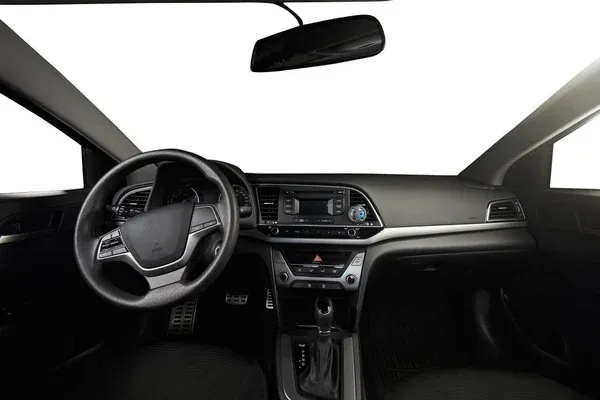
Photo: simple clean car interior minimal dashboard controls, via st3.depositphotos.com
Pop open the brochure for almost any new American car and you'll be greeted by a wall of features. Adaptive cruise control that talks to the navigation system. A 15-inch infotainment screen that controls the seat heating, the ambient lighting, and apparently your entire emotional state. Seventeen different drive modes for a front-wheel-drive crossover that will never see a dirt road. It's a lot. And increasingly, it's a lot that breaks.
Maruti Suzuki, India's dominant automaker and one of the most quietly influential car companies on the planet, has spent decades doing the opposite — and the results are hard to argue with.
The Philosophy Behind the Restraint
Maruti Suzuki's approach to vehicle design isn't accidental minimalism. It's a calculated, deeply held belief that a car should do its job — move people reliably, affordably, and without drama — without turning into a subscription-based gadget on wheels. Engineers at Maruti's Gurugram facilities operate under a principle that every added component is a potential point of failure, and every point of failure is a cost passed on to the owner.
This thinking shapes everything from powertrain choices to interior layouts. The result is vehicles that feel immediately intuitive to operate, require less dealer intervention over their lifespan, and hold their value in ways that should make American brand managers genuinely nervous.
It's not that Maruti doesn't know how to add features. It's that they've decided, deliberately, that many of those features don't belong in a car that needs to serve millions of real people in real traffic.
What 'Good Enough' Actually Looks Like in Practice
Take the Maruti Suzuki Swift — a car we've covered extensively here at Maruti Udyog. Its infotainment setup is clean, functional, and doesn't require a tutorial. Physical buttons still exist for climate control. The steering wheel has controls that are easy to find by feel. Compare that to the experience of, say, navigating a modern American pickup truck's climate menu through three sub-screens while merging onto a highway.
Or look at the Maruti Alto, which has remained one of India's best-selling vehicles for years running. Its engine is a small, naturally aspirated unit with minimal electronics overlaid on top. Mechanics across India can service it with standard tools. Parts are cheap and available everywhere. Owners don't need a $200-per-hour dealer diagnostic session every time a warning light pops on.
The Wagon R — another perennial bestseller — follows the same logic. Tall, practical, efficient, and engineered to last without demanding constant attention. These aren't exciting specs to read on paper. But they translate to a genuinely low-stress ownership experience that American car buyers, drowning in dealer service fees and software update notices, might find refreshing.
When 'More' Becomes a Liability
Here's the uncomfortable truth about modern American automotive design: complexity has become a selling point divorced from actual owner benefit. Automakers know that a longer feature list moves units off the lot. What happens two years later when the integrated touchscreen module fails and costs $1,400 to replace? That's the next owner's problem, or the dealer's revenue stream — depending on how you look at it.
J.D. Power's annual reliability studies have been quietly damning on this front for years. The categories dragging down American brand scores aren't engines or transmissions — the mechanical fundamentals are generally solid. It's infotainment systems, voice recognition software, connectivity features, and driver assistance tech that generates the most complaints. In other words, the exact stuff that gets the biggest headlines in press releases.
Maruti Suzuki sidesteps most of this by asking a simple question before adding anything to a vehicle: does this feature actually improve the ownership experience for the average driver, or does it just look impressive in a commercial? More often than not, the answer leads to leaving it out.
Reliability as a Feature
One of the most underrated aspects of the Maruti ownership experience is what doesn't happen. Owners don't spend weekends troubleshooting phantom electrical gremlins. They don't get stranded because a sensor controlling seventeen other systems decided to malfunction. They don't receive software update notifications that, if ignored, gradually degrade vehicle performance.
In the US, we've started to accept a certain level of automotive complexity as inevitable — almost aspirational. If your car doesn't have a heads-up display and semi-autonomous highway driving, is it even a real car? Maruti Suzuki's market dominance in India — where they've held over 40% market share for extended periods — suggests that a massive population of real-world drivers would answer that question with a resounding 'yes, actually.'
Reliability is a feature. Low maintenance costs are a feature. Not having to read a 300-page manual to figure out how to turn on your heated seats is a feature. American automakers used to understand this. Somewhere along the way, the marketing department took over the engineering brief.
What American Buyers Could Take From This
None of this is an argument that American cars are bad. Many of them are genuinely impressive machines. But there's a growing segment of US buyers — particularly younger buyers dealing with rising insurance costs, steep loan rates, and squeezed household budgets — who are asking the same questions Maruti Suzuki built its entire brand philosophy around.
Do I need all of this? What am I actually paying for? What's going to cost me money three years from now?
Maruti Suzuki's answer to those questions has produced some of the most beloved, most dependable, and most financially sensible cars on the planet. The 'good enough' label undersells it, honestly. In a world of automotive excess, knowing exactly what to leave out might be the most sophisticated design skill of all.