Built Tougher Than You'd Expect: How Maruti Suzuki's Durability Obsession Is Quietly Embarrassing the Competition
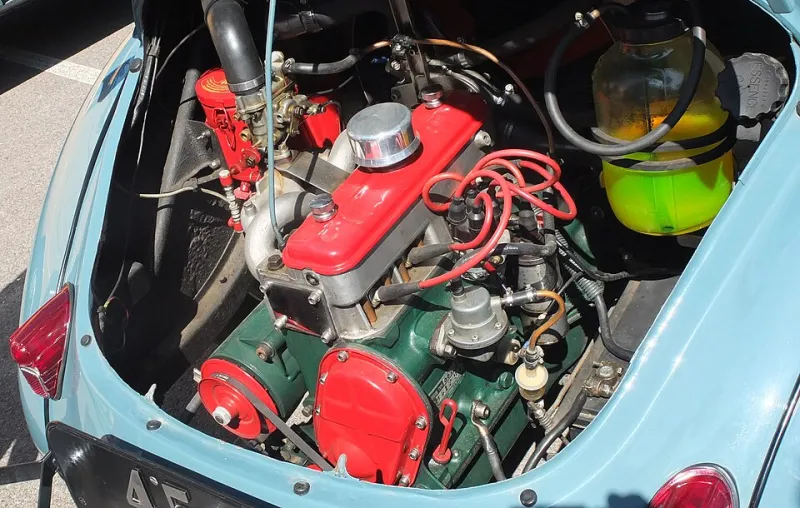
Photo: Palauenc05, CC BY-SA 4.0, via Wikimedia Commons
Picture a car that survives potholed mountain roads in Himachal Pradesh, monsoon flooding in Chennai, and stop-and-go gridlock in Mumbai — day after day, year after year, without flinching. That's not a marketing pitch. That's just a Tuesday for a Maruti Suzuki owner.
For American car buyers raised on the idea that durability means German engineering or Japanese precision, the notion that an Indian automaker might be setting the global benchmark for long-term reliability probably sounds a little far-fetched. But spend some time digging into how Maruti Suzuki actually builds its vehicles, and the picture that emerges is genuinely surprising.
The Road That Tests Everything
Here's the thing about engineering a car for India: you can't fake it. The country's road network is one of the most punishing on the planet. You've got crumbling rural highways, speed bumps that appear out of nowhere (and are roughly the height of a small boulder), temperatures that swing from 115°F desert heat to Himalayan cold, and humidity levels that eat lesser vehicles alive.
Maruti Suzuki doesn't just acknowledge these conditions — they design around them from day one. Their engineering teams run extensive validation tests on real Indian roads, not just controlled proving grounds. Components are stress-tested beyond their expected operating range. Suspension geometry is tuned specifically for high-impact absorption. Seals and gaskets are engineered to handle extreme thermal cycling that most automakers in temperate climates simply don't account for.
The result? Maruti vehicles routinely clock 200,000 to 400,000 kilometers — that's 125,000 to nearly 250,000 miles — with minimal major mechanical intervention. In a country where car ownership often represents a family's largest financial investment, that kind of longevity isn't a bonus feature. It's the whole point.
What Japanese Rivals Got Wrong
For years, Japanese automakers like Honda and Toyota dominated the "reliability" conversation in markets worldwide, and they still hold serious credibility in the US. But in India — their own backyard, culturally speaking — they've found Maruti Suzuki to be a genuinely stubborn competitor.
The reason isn't that Japanese engineering is bad. It's that Maruti figured out something specific: reliability in a developing market requires a different kind of engineering discipline. It's not just about building quality parts. It's about building parts that are simple enough to be serviced anywhere, cheap enough to replace without financial trauma, and robust enough to tolerate owners who may not always follow the service schedule to the letter.
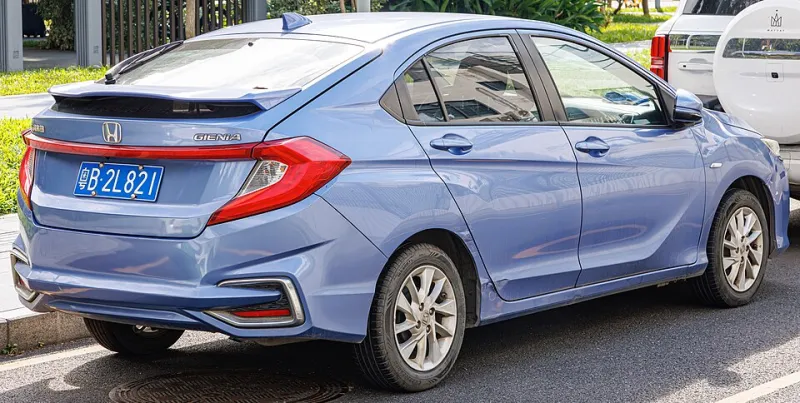
Honda's City and Toyota's Etios have both struggled to match Maruti's ownership-cost equation in India. Maruti's service network — over 4,000 authorized workshops across the country — means that even in a small town hours from a major city, a Maruti owner can get their car fixed quickly and affordably. Rivals simply can't match that infrastructure density, and infrastructure is part of the reliability story.
The Philosophy Behind the Parts
Maruti's approach to component engineering is worth examining closely, because it runs counter to some trends that American automakers have fully embraced.
Where Detroit has increasingly moved toward complexity — turbocharged engines in every segment, dual-clutch transmissions, sensor-laden driver-assist systems layered on top of one another — Maruti has largely stayed committed to mechanical simplicity where simplicity serves the owner. Their most popular engines are naturally aspirated or lightly turbocharged units with fewer failure-prone components. Their transmissions are tuned for longevity over performance thrill.
This isn't a lack of ambition. It's a deliberate trade-off. A car with fewer electronic modules is a car with fewer things that can go wrong at 150,000 miles. A straightforward fuel injection system is one a local mechanic can diagnose without a $5,000 diagnostic computer. Maruti's engineers talk openly about designing for the entire ownership lifecycle, not just the test drive.
There's also a manufacturing discipline piece here. Maruti's Gurugram and Manesar plants operate with quality control processes benchmarked against Suzuki's global standards — the same standards that underpin Suzuki's reputation in Japan. Defect rates are tracked obsessively. Supplier components go through multi-stage validation. It's not glamorous, but it's effective.
What American Consumers Are Actually Paying For
Let's be honest about something: American car culture has drifted toward equating "quality" with "premium features." A vehicle with a massive touchscreen, a panoramic sunroof, and a Bose sound system feels like a quality vehicle, even if its powertrain is more fragile than what you'd find in a base trim Maruti Alto.
The data tells a more complicated story. Consumer Reports' reliability surveys consistently show that feature-loaded vehicles — especially those with cutting-edge technology in early production years — underperform simpler, more mechanically conservative models. The cars that top long-term reliability charts tend to be the ones that didn't try to do everything at once.
Maruti's philosophy aligns almost perfectly with what the reliability data actually rewards. And as American buyers face a market where new vehicle prices have surged past $48,000 on average, the question of total cost of ownership — purchase price plus maintenance plus repairs over a decade — deserves more attention than it typically gets.
The Durability Lesson Worth Stealing
None of this means American automakers should strip their vehicles down to spartan economy cars. That's not the takeaway. The lesson is more nuanced: durability-focused design and desirable features aren't mutually exclusive, but they require intentional engineering trade-offs that some manufacturers have stopped making.
Maruti's success in India — where they hold roughly 40% of the passenger vehicle market — is proof that consumers will choose long-term reliability over short-term flash when the value proposition is clear. American buyers, increasingly skeptical of repair bills and extended warranty costs, might be more receptive to that message than the industry assumes.
The next time you see a 15-year-old Maruti Alto still running daily service routes in Delhi, consider what that actually represents: an engineering philosophy that prioritized your second and third decade of ownership, not just the first. That's a lesson worth paying attention to.