Maruti's Gas Engines Are Getting Hybrid-Level MPG — And They're Doing It the Simple Way

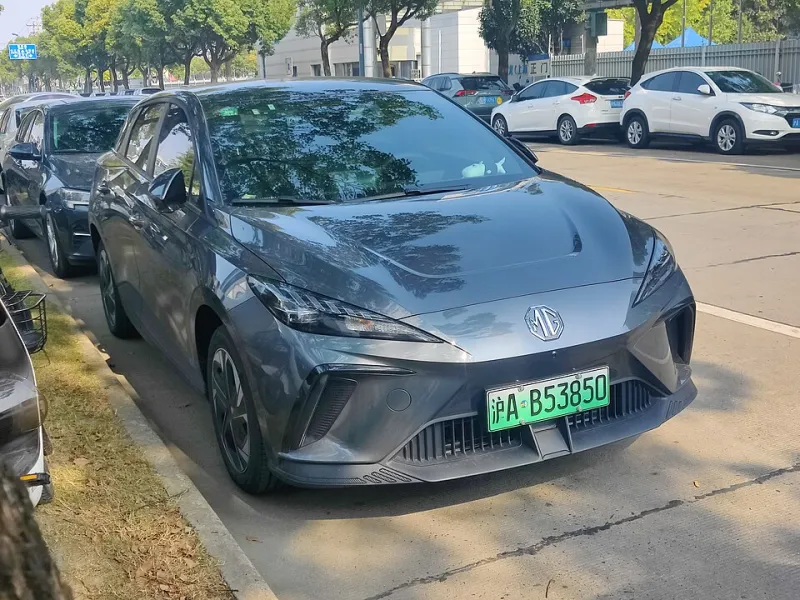
Photo: Senator Stabenow, CC BY 2.0, via Wikimedia Commons
The American automotive conversation in 2024 goes something like this: if your car doesn't have a plug or a battery, you're living in the past. Hybrids are the responsible choice. EVs are the future. Conventional combustion engines are on borrowed time.
That's the narrative, anyway. Maruti Suzuki's engineering team in India seems to find it somewhere between incomplete and mildly amusing.
Because while US automakers have been racing to stack hybrid systems on top of conventional drivetrains — adding weight, complexity, and sticker price in the process — Maruti has been quietly wringing extraordinary efficiency out of refined petrol engines that don't need a battery pack to compete. The numbers are real. The approach is worth a serious look.
What "Advanced Petrol" Actually Means
When Maruti talks about their advanced petrol technology, they're not describing a gimmick. The engineering underneath is substantive.
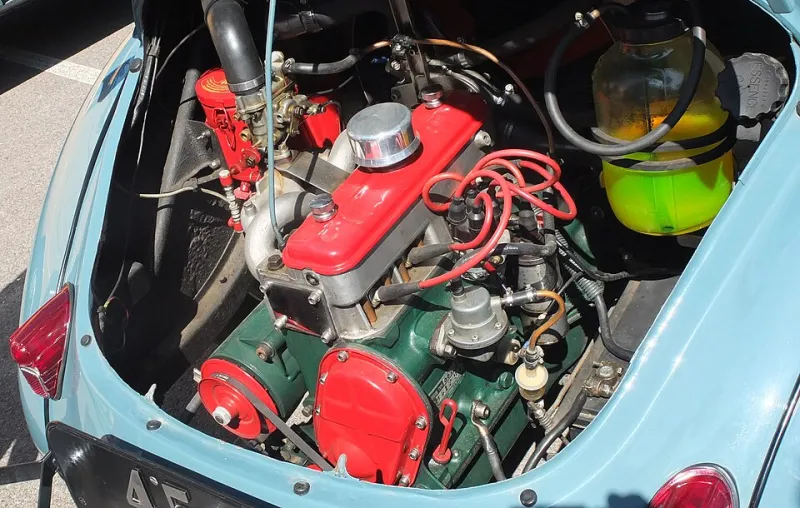
Their current-generation engines, including the widely used 1.2-liter K-Series and the newer Z-series units, incorporate variable valve timing systems that continuously optimize the engine's breathing based on throttle demand and RPM. At light loads — say, cruising on a highway — the engine operates in a more conservative state, reducing pumping losses and fuel consumption. Under hard acceleration, the valve timing shifts to prioritize power. The transition is seamless and happens dozens of times per minute.
Layered on top of that is a fuel delivery system tuned for precise injection timing, reducing the kind of fuel waste that older port-injection setups were prone to. Combined with aggressive idle-stop systems (which cut the engine at stoplights and restart it in under a second), Maruti has built a fuel-saving architecture that doesn't require a single lithium-ion cell.
The lightweight construction philosophy ties it all together. Maruti's vehicles are engineered to stay light — a discipline that American automakers have largely abandoned as they've loaded vehicles with features and safety equipment. A lighter car needs less energy to move, period. It's physics, and Maruti respects it.
The Numbers That Start the Argument
Let's get specific, because this is where the conversation gets interesting for American drivers.
Maruti's Baleno with the 1.2-liter Dualjet engine — featuring dual injectors per cylinder for more precise fuel atomization — is officially rated at around 22-23 kilometers per liter under Indian testing conditions. Translating that into US MPG terms (accounting for the differences between Indian and EPA testing cycles) puts real-world estimates somewhere in the 47-52 MPG range under mixed driving conditions.
For context: the Toyota Corolla Hybrid, one of the most fuel-efficient non-plug-in hybrids available in the US, is EPA-rated at 52 MPG combined. A conventional Honda Civic sits around 36 MPG combined.
Maruti's petrol-only Baleno is essentially splitting that difference — without the hybrid premium on the purchase price, without the battery that will eventually need attention, and without the added weight that hybrid systems introduce. That's a meaningful engineering achievement, and it deserves more attention than it gets outside of India.
The Case Against Mandatory Electrification
None of this is an argument against hybrids or EVs. Electrification makes real sense in specific use cases — urban driving, short daily commutes, households with reliable home charging. That's not in dispute.
But the American market has a habit of treating automotive trends as binary. Internal combustion is dying; electrification is inevitable; anything in between is stalling. That framing ignores a significant chunk of the country's driving reality.
Consider rural America, where charging infrastructure remains genuinely sparse. Or consider buyers for whom a hybrid's $3,000-$5,000 price premium represents a real financial stretch. Or long-haul drivers who cover 30,000+ miles per year and can't always count on a Level 2 charger at their destination. For these buyers, a highly refined petrol engine that delivers near-hybrid efficiency without hybrid complexity isn't a compromise. It's actually the smarter choice.
Maruti has understood this for years, because their market is full of exactly these buyers. India's charging infrastructure is improving but remains limited. Indian consumers are acutely price-sensitive. And Indian roads demand mechanical reliability over technological novelty. The advanced petrol engine answers all three concerns simultaneously.
Engineering Philosophy vs. Marketing Philosophy
Here's an uncomfortable truth about the US auto industry: a lot of the push toward hybrids and EVs is driven by regulatory compliance math, not purely by consumer demand or engineering logic. CAFE standards and state-level emissions rules create strong incentives for automakers to electrify, regardless of whether electrification is the optimal solution for every buyer segment.
Maruti operates in a different regulatory environment, which has given their engineers more freedom to pursue efficiency through combustion refinement rather than electrification. The result is a body of engineering work that the rest of the industry would benefit from studying.
Variable valve timing, stratified charge combustion, lightweight architecture, and precision fuel delivery aren't new ideas — but Maruti has pushed them further and packaged them more cost-effectively than most. Their engineers have essentially asked: how efficient can we make a petrol engine before we need to reach for a battery? The answer, it turns out, is pretty damn efficient.
What This Means for the American Buyer
Maruti Suzuki vehicles aren't currently sold in the US, which makes this partly a thought experiment. But the engineering principles aren't hypothetical — they're real, tested, and proven across millions of vehicles in one of the world's most demanding automotive markets.
The takeaway for American consumers isn't "avoid hybrids." It's more like: demand more from conventional engines before accepting that complexity is the only path to efficiency. Ask your dealer what the real-world MPG looks like, not just the EPA sticker. Consider whether the hybrid premium in your budget actually pencils out over your ownership timeline.
And maybe, just maybe, pay attention to what Maruti's engineers have been building in Gurugram. Because when a relatively small automaker in a cost-sensitive market figures out how to approach hybrid-level fuel economy without a hybrid system, that's not a footnote. That's a lesson the whole industry should be taking notes on.