How Does a Car Company Sell You a Reliable, Feature-Packed Vehicle for Under $15K and Still Turn a Profit?
The Number That Keeps CFOs Up at Night
Let's start with a number: roughly $15,000. In the United States, that amount barely gets you into a stripped-down used car with questionable history. In India, it lands you a brand-new Maruti Suzuki with a warranty, a modern safety suite, and enough tech to make your daily commute genuinely enjoyable. That gap isn't just a curiosity for automotive nerds — it's a structural statement about how two very different industries think about the relationship between cost and value.
Maruti Suzuki, the dominant force in India's passenger car market with a share that regularly hovers above 40 percent, didn't stumble into affordable pricing. They engineered it. And the more you pull back the curtain on how they do it, the harder it becomes to ignore what that says about the inflated cost structure baked into American vehicle production.
It Starts on the Factory Floor
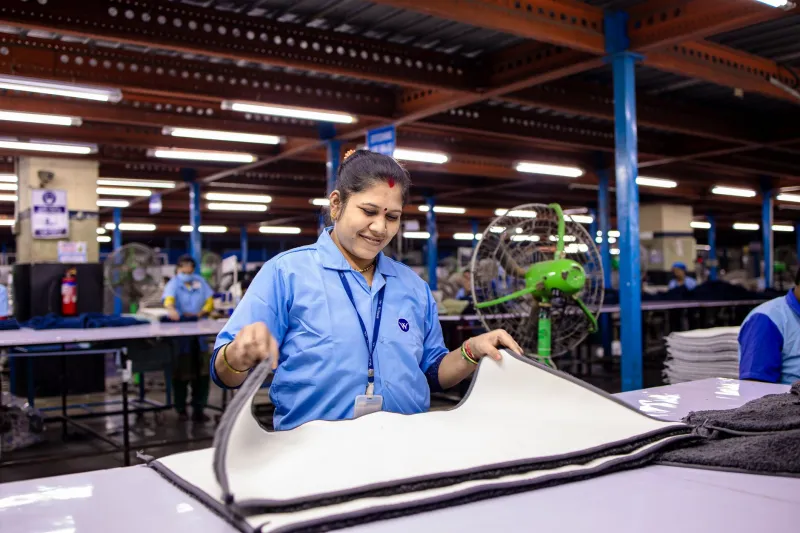
Maruti's manufacturing philosophy isn't a mystery, but it is disciplined in ways that most Western automakers have quietly abandoned. Their production facilities in Gurugram and Manesar operate with a relentless focus on eliminating waste — not in the inspirational poster sense, but in the ruthlessly practical, every-bolt-counts sense. Lean manufacturing principles that American companies talk about in quarterly earnings calls are actually lived out on Maruti's assembly lines.
Labor costs in India are lower, sure. But that's a lazy explanation that misses the bigger picture. Maruti's cost advantage isn't primarily about cheap workers — it's about a supply chain that's been optimized over four decades of operating in one of the world's most price-sensitive markets. When your customers are making careful, sometimes years-long decisions about whether they can afford a car, you learn very quickly that every unnecessary dollar in the manufacturing process is a sale you might not close.
The company sources a significant portion of its components domestically, from a dense network of Indian suppliers who've grown up alongside Maruti itself. That localization reduces logistics costs, cuts import tariff exposure, and gives engineers tight feedback loops with the people actually making the parts. Compare that to American automakers managing sprawling global supply chains across multiple continents, and the cost differential starts to make a lot more sense.
Design Choices That Are Actually Financial Choices
Here's something the automotive press doesn't say enough: every design decision is also a cost decision. Maruti's engineers understand this at a molecular level. When they design a dashboard, they're not just thinking about aesthetics — they're thinking about how many components it requires, how long it takes to assemble, and whether the materials will hold up through a decade of use without generating warranty claims.
That philosophy produces vehicles that look simple but aren't simplistic. The Maruti Swift, for example, runs a 1.2-liter naturally aspirated engine that delivers competitive fuel economy without the complexity — and the repair bills — that come with turbocharged systems. The interior uses durable plastics that aren't trying to mimic leather or carbon fiber. The infotainment system does what you need without being a subscription-gated tech demo.
American automakers, by contrast, have spent the last two decades layering on features that sound impressive in marketing materials but add cost, complexity, and potential failure points. Panoramic sunroofs. Massaging seats. Augmented reality heads-up displays. These things have their place — but when they become standard equipment on entry-level vehicles to justify higher MSRPs, they stop being features and start being financial engineering.
The Profitability Paradox
Here's what makes Maruti's pricing model genuinely remarkable: they're not doing this at a loss. Maruti Suzuki consistently posts healthy profit margins, even while selling cars at prices that would represent a rounding error on an F-150's options sheet. In fiscal year 2023-24, the company reported net profits north of $1.5 billion USD on revenues that reflect a volume-driven, not margin-driven, business model.
That's the part American automakers find most unsettling. It's one thing to undercut on price if you're hemorrhaging money to do it — that's just a VC-funded race to the bottom. It's another thing entirely to undercut on price while running a genuinely profitable operation. Maruti's numbers suggest that American vehicle pricing isn't a reflection of what cars actually cost to build well. It's a reflection of what the market has been conditioned to accept.
Detroit has, for years, been moving deliberately upmarket — abandoning small cars and sedans to focus on trucks and SUVs where margins are fatter. Ford killed the Fiesta and the Focus. GM walked away from the Sonic. The logic was sound from a short-term profit standpoint. But it also left an entire segment of American buyers — people who just need reliable, affordable transportation — without compelling new options from domestic brands.
What American Buyers Are Actually Paying For
When you spend $30,000 on an entry-level American sedan, a meaningful chunk of that price isn't going toward the vehicle itself. It's covering dealer markups, advertising budgets that run into the billions annually, executive compensation structures, and the overhead of maintaining an enormous North American dealer network. Maruti operates in a different ecosystem — one where the path from factory to buyer is shorter, leaner, and less laden with intermediary costs.
There's also the warranty cost factor. American automakers price in significant warranty reserves because their vehicles, statistically, need more warranty work. Maruti's engineering-for-durability approach means fewer claims, which means lower reserves, which means more room to price competitively without sacrificing margin.
None of this is a knock on American workers or American engineering talent. It's a structural observation about what happens when an industry optimizes for margin extraction rather than value delivery over a long enough period of time.
The Nervousness Is Justified
Maruti Suzuki isn't selling cars in America right now — regulatory barriers, import tariffs, and homologation costs keep them off US lots for the moment. But the pricing model they've perfected is already influencing the global conversation about what affordable vehicles should look like. Korean brands learned from it. Chinese automakers are studying it aggressively. And as those players push harder into the American market, the pressure on domestic automakers to justify their cost structures is only going to intensify.
The $15,000 question isn't really about Maruti Suzuki specifically. It's about whether the American auto industry is ready to have an honest conversation about the gap between what vehicles cost to build and what consumers are being asked to pay. Maruti's four-decade track record suggests that gap is wide — and that closing it is entirely possible, if the will is there.
For American car buyers watching their monthly payments climb and their options narrow, that conversation can't come soon enough.