How Maruti Suzuki Builds Cars for Less — And What That Means for Your Next Purchase
The average transaction price for a new vehicle in the United States crossed $48,000 in recent years. Let that sit for a second. Nearly fifty thousand dollars — for the average car, not a luxury purchase. Meanwhile, Maruti Suzuki has been producing well-engineered, well-reviewed vehicles in India at a fraction of that cost, moving millions of units annually, and maintaining profit margins that most American automakers would find quite acceptable.
So what exactly is going on? Is it just cheap labor? Lower safety standards? Corners being cut somewhere we can't see? The honest answer is: not really. What Maruti Suzuki has built is a manufacturing and supply chain operation that deserves serious study — and it has real implications for why American cars cost what they cost.
The Localization Advantage
One of the foundational pillars of Maruti Suzuki's cost structure is an extraordinarily high level of domestic sourcing. The company has spent decades developing a dense supplier ecosystem across India, particularly in and around the Manesar and Gurugram manufacturing hubs in Haryana. Estimates suggest that Maruti sources upward of 70–80% of its components locally, with many suppliers operating within close geographic proximity to the assembly plants.
For American manufacturers, the comparison is instructive. US automakers have historically relied on complex, globe-spanning supply chains — parts manufactured in one country, assembled in another, shipped across an ocean, trucked across a continent. Each handoff adds cost, time, and fragility. The supply chain disruptions of the early 2020s made this painfully visible when semiconductor shortages half a world away shut down assembly lines in Michigan and Kentucky.
Maruti's localized model isn't immune to disruption, but it's structurally more resilient and significantly cheaper to operate on a per-unit basis. Shorter logistics chains mean lower freight costs, faster response times when demand shifts, and tighter quality control across the supplier network.
Lean Manufacturing, Taken Seriously
Maruti Suzuki's manufacturing philosophy draws heavily from the Toyota Production System — not surprising given the company's long-standing technical partnership with Suzuki, which itself absorbed many of Toyota's lean principles. But Maruti has adapted and in some ways intensified these practices for the Indian market context.
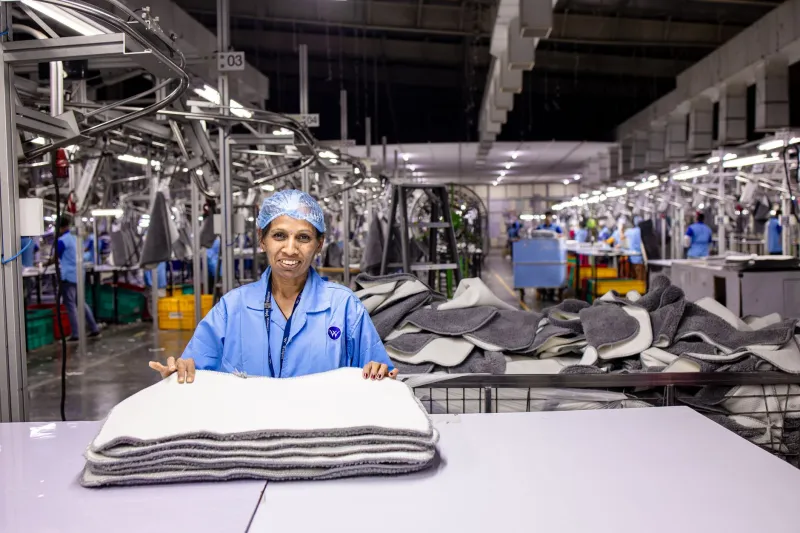
The core idea is relentless waste elimination. Not just waste in the materials-and-scrap sense, but waste in time, motion, inventory, and process complexity. Maruti's plants operate with tightly coordinated just-in-time inventory systems, meaning components arrive at the assembly line precisely when needed rather than sitting in expensive warehousing. Floor space is used with surgical efficiency. Assembly line workers are cross-trained to handle multiple roles, reducing idle time.
For context, American automotive plants — particularly legacy union facilities — often carry significantly higher overhead in terms of facility size, inventory buffers, and labor specialization. None of these are inherently wrong choices, but they add up in the final sticker price.
Economies of Scale in a High-Volume Market
Maruti Suzuki sells roughly 1.5 to 2 million vehicles per year in the domestic Indian market alone. That kind of volume creates purchasing leverage with suppliers that most American brands — outside of Ford and GM at their peaks — rarely achieve at the model-specific level.
When you're ordering brake components, wiring harnesses, or seat fabric for two million vehicles annually from a tight cluster of local suppliers, your per-unit cost drops substantially. Suppliers can invest in dedicated tooling, optimize their own production runs, and offer pricing that simply isn't available at lower volumes.
American automakers produce high volumes too, but that volume is spread across a much wider model range with significantly more trim levels, option packages, and regional variants. The complexity multiplies the supply chain, fragments the purchasing power, and drives up per-unit costs across the board. Maruti's model lineup, while broader than it once was, still reflects a philosophy of focused platforms and controlled complexity.
The Platform Sharing Multiplier
We've touched on platform sharing in previous coverage here at Maruti Udyog, but it's worth revisiting in the context of manufacturing economics. Maruti Suzuki's ability to share underpinnings, powertrains, and major components across multiple models isn't just an engineering efficiency — it's a supply chain multiplier.
When the same engine family powers the Swift, the Baleno, and the Dzire, the production volume for every component of that engine increases dramatically. Suppliers achieve better economics. Maruti achieves better pricing. Assembly workers develop deeper familiarity with the hardware, reducing error rates and training costs. The entire system reinforces itself.
American manufacturers have pursued platform sharing strategies too — with mixed results. The challenge in the US market is that brand differentiation pressure, trim level proliferation, and consumer expectation for customization often undercut the efficiency gains that shared platforms theoretically deliver.
What This Means for the American Buyer
Let's be clear: Maruti Suzuki isn't going to start selling cars in the United States anytime soon. The regulatory, safety certification, and distribution infrastructure required to enter the US market is a mountain that hasn't made financial sense to climb. But the lessons embedded in how Maruti operates are directly relevant to the cost problem American buyers face every time they walk into a dealership.
If American automakers were to genuinely commit to regional supply chain consolidation, reduce trim-level complexity, and apply lean manufacturing discipline at the same intensity Maruti does — not as a cost-cutting exercise but as a core design philosophy — the impact on vehicle pricing could be significant. Industry analysts have suggested that meaningful supply chain rationalization alone could reduce manufacturing costs by several thousand dollars per vehicle.
That's not a small number when the average American buyer is financing $45,000 over 72 months at a rate that makes the total cost considerably higher than the sticker.
Maruti Suzuki didn't stumble into its cost efficiency. It was built, systematically, over decades, with a clear-eyed understanding that making cars affordable isn't just a moral good — it's the entire business model. American automakers used to understand that too. The evidence suggests it might be time to remember.